
A custom home should do more than meet your needs today. With thoughtful planning, it can also accommodate changing family arrangements, new technology, evolving mobility needs and the way you want to live years from now.
Future-ready design is not about predicting every life change. It is about creating a flexible, comfortable and well-built home that gives you more options over time.
Why Future-Proof Your Custom Home?
Planning for adaptability from the beginning can help a home remain comfortable and functional as life changes. It may support aging in place, multigenerational living, caregiving, working from home or simply a different use of space in the future.
Many of these decisions are easier and more cost-effective to incorporate during the original design and construction process than to add through a major remodel later.
What Oregon’s New Adult Housing Program Can Teach Us
Oregon is placing new emphasis on homes that allow people to remain safe and independent as they age. In 2026, the state launched its Older Adult Housing Program for qualifying affordable rental developments. The program’s design standards call for a combination of fully accessible and adaptable homes, along with thoughtful consideration of mobility, hearing, vision, fall prevention and changing support needs.
While these requirements do not apply to privately built custom homes, they reinforce an important design principle: accessibility is most effective when it is considered from the beginning.
In a custom home, that might mean planning for:
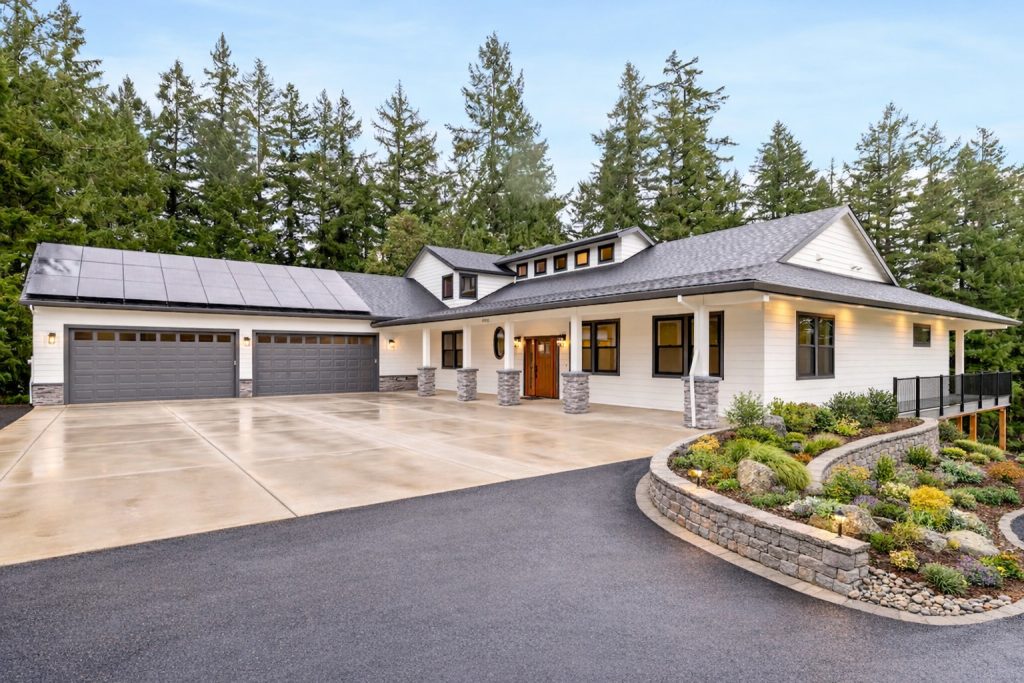
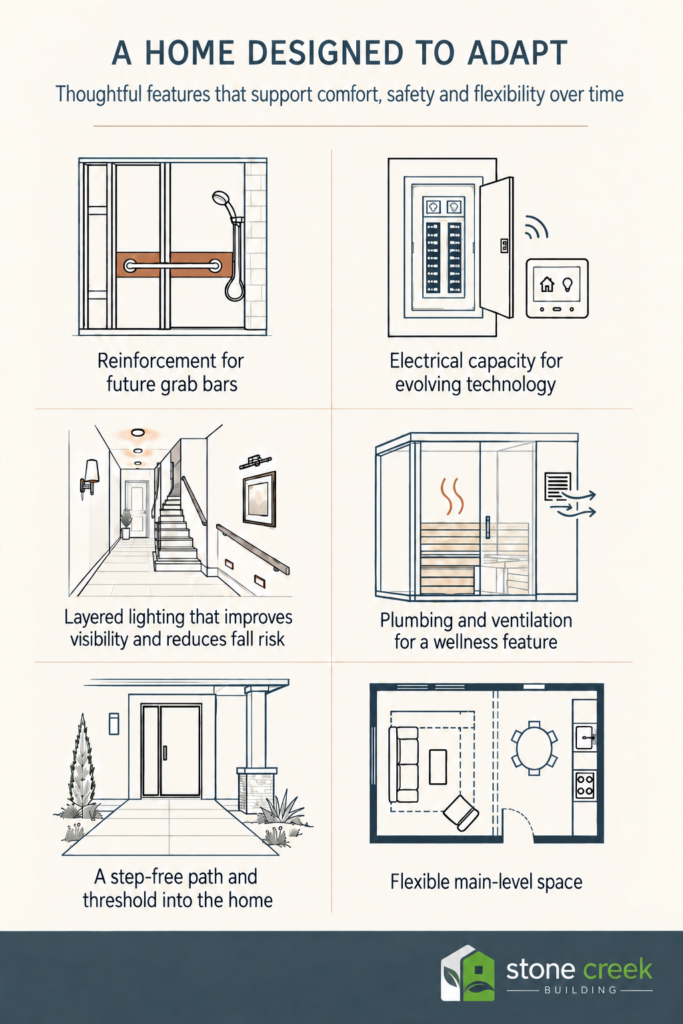
- At least one step-free entrance
- A main-level bedroom and full bathroom
- Wider doorways and comfortable circulation paths
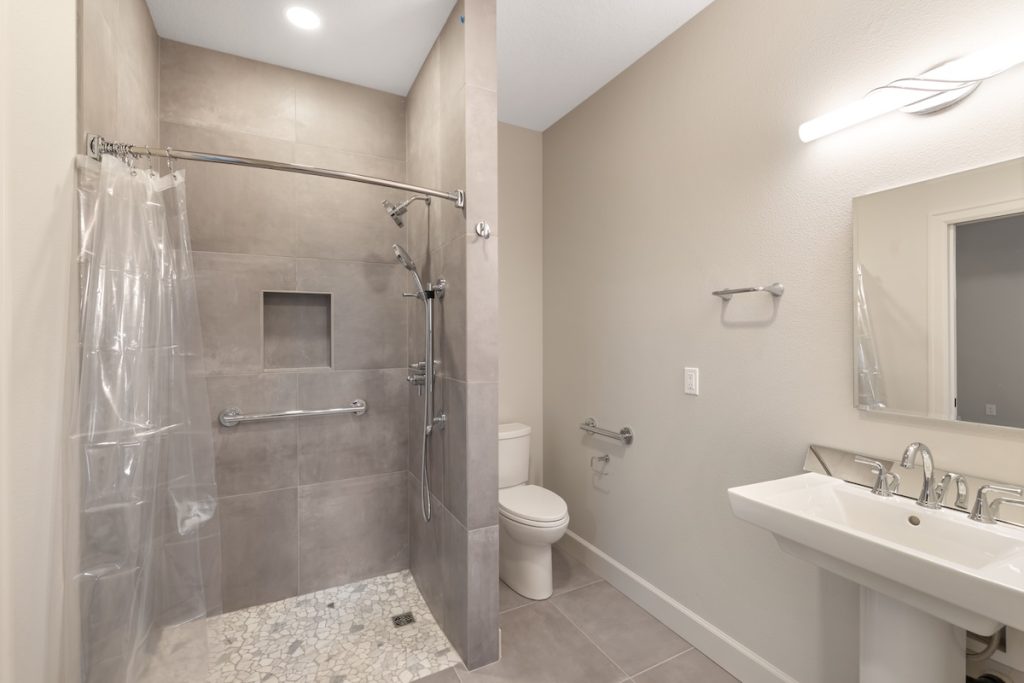
- A curbless shower with reinforcement for future grab bars
- Lever-style handles and easy-to-operate fixtures
- Layered lighting that improves visibility and reduces fall risk
- An intuitive floor plan that is easy to navigate
- Spaces that can accommodate changing family or caregiving needs
These choices do not have to make a home look institutional. When incorporated into the original design, they can feel seamless, beautiful and useful to people of every age.
Flexible Layouts for Changing Family Needs
Flexible layouts can support changing family needs without sacrificing the character of the home. A main-level suite, private entrance or versatile room can create options for multigenerational living, in-home support, guests, working from home or changing mobility needs.
The goal is not to assign every room a permanent future purpose. It is to design spaces with enough flexibility that they can transition without requiring a major addition or remodel.
The Page home is a thoughtful example of multigenerational design. Its three-story layout includes an elevator, making each level more accessible and allowing the home to support changing mobility needs over time. [Explore The Page home.]
Integrating Technology and Smart Home Systems
Smart-home technology can make a home more convenient today while reducing physical demands as mobility, vision or dexterity changes. One feature we saw at the 2026 Street of Dreams was motion-activated stair lighting. Low-level lights integrated along stairways can illuminate the path as someone approaches, improving visibility without requiring them to locate a switch in the dark.
Other accessible smart-home features may include:
- Motion-activated lighting in hallways, bathrooms and entry areas
- Voice, app and wall controls for lights, temperature and window coverings
- Smart locks and video doorbells that reduce the need to reach or move quickly to an entrance
- Automatic appliance shutoff features
- Water-leak and temperature sensors that provide early alerts
- Adjustable lighting scenes that improve visibility at different times of day
- Security and emergency-notification systems that can be monitored remotely
The best systems offer more than one way to operate them. Traditional switches and easy-to-reach controls should remain available so the home does not depend entirely on a phone, voice command or internet connection.
Planning wiring, electrical capacity and compatible systems during the design phase can also make future technology easier to add or update. Thoughtfully integrated technology should support good design, not replace essentials such as adequate lighting, clear pathways and safe stair construction.
Accessible Details That Work for Everyone
Some of the most useful future-ready features are also the least noticeable. Lever-style door handles, rocker light switches, easy-grip cabinet pulls, comfortable faucet controls and smooth flooring transitions make daily tasks easier for people of all ages and abilities.
Other details are best planned before they are needed. Reinforcement behind shower walls can allow grab bars to be installed later without a major remodel, while thoughtfully placed outlets, controls and storage reduce unnecessary reaching or bending. Slip-resistant flooring and zero-threshold entries can also improve safety while maintaining a clean, contemporary appearance.
When these choices are integrated into the original design, accessibility feels like a natural part of a beautiful home rather than a later modification.
Energy Efficiency, Resilience and Low-Maintenance Design
A future-ready home should also be designed to perform well over time. A well-insulated and carefully sealed building envelope, efficient windows, appropriately sized heating and cooling systems, and thoughtful ventilation can improve comfort while reducing unnecessary energy use.
Durable exterior materials, easy-to-maintain finishes and quality building components can also reduce the time and expense required to care for the home.
Future planning may include electrical capacity or conduit for solar panels, battery storage, electric vehicle charging and other technologies that a homeowner may want to add later. Not every feature needs to be installed immediately. Preparing for it during construction can preserve more options for the future.
Looking Ahead: Wellness at Home
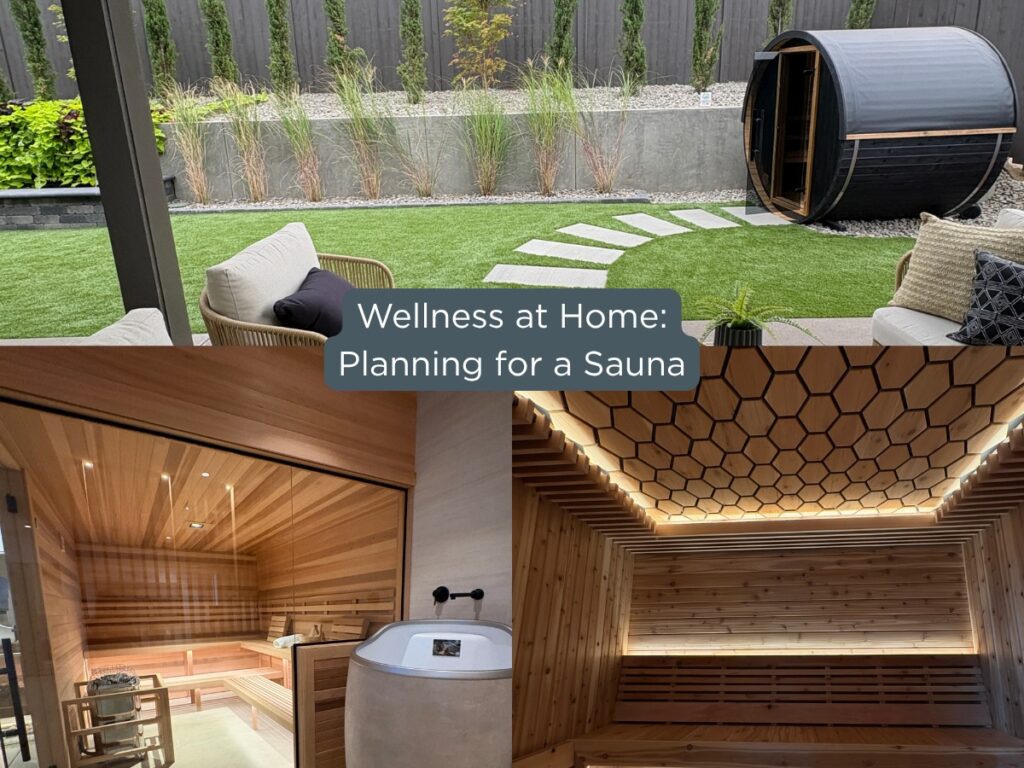
One of the clearest trends we saw at the 2026 Street of Dreams was the inclusion of saunas and cold plunges in custom-home designs. These features reflect a broader movement toward homes that support everyday wellness, relaxation and recovery.
For some homeowners, that may mean a dedicated sauna or wellness room. For others, it could include a steam shower, home gym, quiet retreat, improved indoor air quality or stronger connections to natural light and outdoor spaces.
The most important consideration is planning ahead. Saunas, cold plunges and other wellness features may require dedicated space, electrical capacity, ventilation, drainage or plumbing. Including those needs in the original design can make the space easier and more cost-effective to complete, whether it is installed immediately or added later.
Future-proofing does not mean preparing for every possible scenario. It means identifying what matters most to you and incorporating enough flexibility that your home can continue to support you as life evolves.
By planning for adaptable layouts, accessible details, evolving technology, energy performance and everyday wellness, you can create a home that feels right today while preserving more choices for tomorrow.
Planning a custom home in Oregon? Start a conversation with the Stone Creek Building team about the features that could help your home serve you well for years to come.